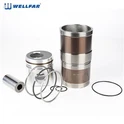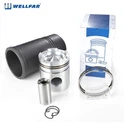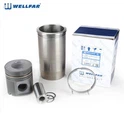
Below are some of the piston manufacture methods:
1.Forging (Pressing)
Forging or warm flow pressing is used to manufacture pistons and piston skirts (assembled pistons) from aluminum alloys for engines subject to heavy loading. Sections of extrusion castings are normally used as the feedstock material. Reforming results in much higher and much more uniform strength values than can be achieved with casting.
A further option is found in using semifinished products made of blast-compacted materials or those made up in a powder-metallurgical process. This process technology makes it possible to employ extremely heat-resistant materials for high-performance (racing) pistons, which could not be manufactured with hot metal technology.

2.Liquid Pressing (Liquostatik, Squeeze Casting)
Squeeze casting differs from gravity die casting by the pressure applied to the molten material (up to and beyond 100 MPa), which is maintained until the casting has fully solidified. The extremely good contact of the molten material with the mold walls as it solidifies makes for very fast solidification. In this way, a very fine structure, advantageous in terms of material strength, is created.
Squeeze casting makes it possible to manufacture pistons that are reinforced locally with ceramic fibers or porous metallic materials at the piston head or in the areas around the ring grooves or bosses. These cast-in-place components are penetrated completely by the piston alloy owing to the pressure applied to the molten metal.
Below scheme shows the sequence of operation in the squeeze-casting process. This process combines the advantages of casting and forging.