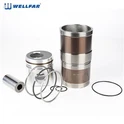
Piston design factors can also affect oil consumption. The lateral and rotational motion of the piston, piston skirt length and oil drain holes are just a few examples of piston design details that can impact oil consumption.
The downward, lateral and rotational motion of the piston can affect the generation of oil film pressure in the piston ring pack area such as the region below the oil control ring. This can affect the flow of oil to the upper region of the piston.

The piston skirt length affects how far up the liner a thick oil film forms. Longer piston skirts cover more of the liner area and have the potential to reduce oil consumption.
Oil drain holes in the oil control ring groove of the piston serve to drain oil from the oil control ring. A large drainage area can keep the amount of oil in the ring pack area down and limit oil consumption. However, for pistons that are oil cooled via an oil jet directed towards the bottom of the piston, the purpose of the holes can be defeated under some conditions and they can act to supply an excessive amount of oil to the ring pack and increase oil consumption. Using ‘scupper slots’, as shown in below figure, in oil cooled pistons to drain oil from the oil ring groove to the piston pin minor axis relief area is an alternative approach and can eliminate or minimize the need for holes behind the oil control ring.

Piston Incorporating Scupper Slots Instead of Drain Holes
Oil cooled VW TDI piston.